
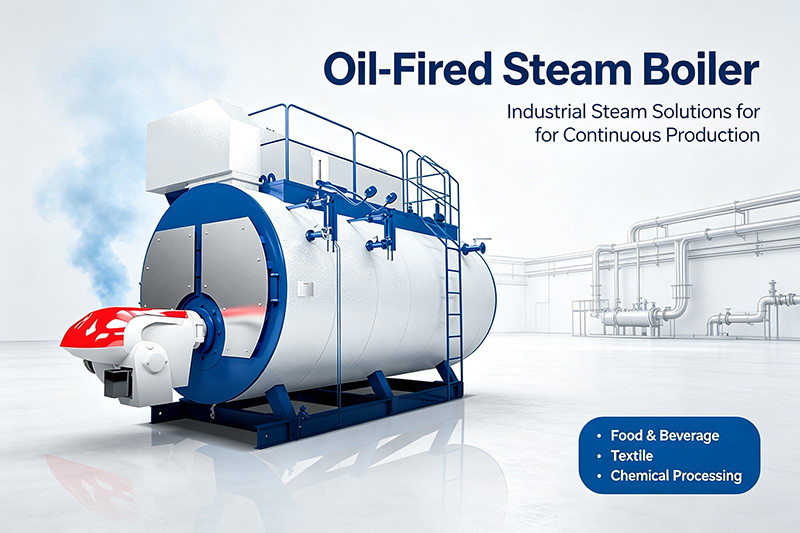
Dabonn Boiler supplied three 6 ton/h oil-fired steam boilers for an industrial project in Saudi Arabia serving the oil and petrochemical sector. The project required multiple boilers rather than a single steam generator, making capacity coordination, fuel handling, steam system configuration, and project integration important parts of the solution.
The three oil-fired steam boilers had a combined rated steam capacity of 18 ton/h, or approximately 18,000 kg of steam per hour when all three units operate at rated capacity.
Why Did the Saudi Project Need Three Oil-Fired Boilers?
Industrial projects in the oil and petrochemical sector can have a large and changing steam demand. Using several boilers allows the total steam capacity to be divided between multiple independent units instead of depending on one large steam generator.
For this Saudi project, Dabonn supplied 3 × 6 ton/h oil-fired steam boilers.
Each boiler was rated at 6 ton/h, giving the project a combined rated capacity of 18 ton/h.
| Project Parameter | Project Information |
|---|---|
| Country | Saudi Arabia |
| Industry | Oil and petrochemical |
| Number of boilers | 3 |
| Capacity per boiler | 6 ton/h |
| Total rated capacity | 18 ton/h |
| Total rated steam output | Approximately 18,000 kg/h |
| Fuel | Oil |
Why Use Multiple 6 Ton Oil-Fired Boilers Instead of One Large Boiler?
There are several practical reasons an industrial project may use multiple oil-fired boilers.
First, multiple units can provide operational flexibility. The plant can operate the required number of boilers according to the current steam demand rather than always operating one large boiler at partial load.
Second, multiple units can provide maintenance flexibility. If one boiler is stopped for inspection or maintenance, the remaining boilers may continue supplying part of the steam demand, depending on the actual system design and production load.
Third, several boilers can make it easier to adjust the operating capacity when production demand changes.
For a fuel-fired boiler system, the configuration should also consider the fuel storage, oil supply, filtration, pumping, burner arrangement, and combustion control system.
However, the best configuration depends on the project’s steam demand profile, operating schedule, redundancy requirements, available space, fuel conditions, and engineering design.
How Much Steam Can the Saudi Oil-Fired Boiler System Produce?
Each oil-fired steam boiler has a rated capacity of 6 ton/h.
With three units:
6 ton/h × 3 = 18 ton/h
Therefore, the combined rated capacity is 18 ton/h, equivalent to approximately 18,000 kg of steam per hour when all three boilers operate at rated capacity.
This is the nameplate capacity. Actual steam production depends on the operating load and process demand.
What Is Important When Designing an Oil-Fired Boiler System?
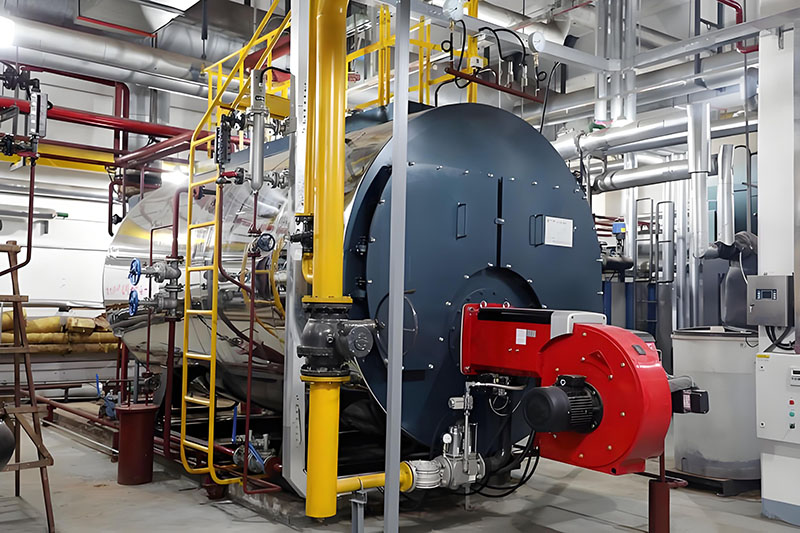
Compared with a gas-fired system, an oil-fired boiler project needs additional attention to fuel storage and fuel delivery.
The oil-fired system needs to deliver fuel to the burner at the required flow and pressure. Depending on the oil type, the project may also require filtration, pumping, fuel heating, and other fuel preparation equipment.
For this reason, the boiler and burner should not be considered separately from the fuel system.
The main points to consider include:
- Oil fuel specification
- Fuel storage capacity
- Oil transfer pump
- Fuel filtration
- Fuel supply pressure
- Burner configuration
- Combustion control
- Fuel heating requirements when applicable
- Steam pressure control
- Boiler safety protection
The exact fuel system depends on the type and specification of the oil used in the project.
Why Is Boiler Control Important in a Multi-Boiler Oil-Fired System?
When several oil-fired boilers supply the same industrial steam system, control becomes particularly important.
The operating system needs to coordinate boiler start-up, shutdown, steam demand, pressure, water level, combustion, fuel supply, and safety protection.
For a multi-boiler project, engineers should consider:
- Steam header configuration
- Boiler sequencing
- Steam pressure control
- Feedwater system
- Oil fuel supply system
- Burner control
- Fuel pump operation
- Water level protection
- Safety valve arrangement
- Electrical control
- Maintenance requirements
The final control architecture should be determined during the technical design stage according to the project’s operating requirements.
What Makes an Oil-Fired Boiler Project for the Petrochemical Industry Different?
Oil and petrochemical facilities can have demanding requirements for equipment reliability, process continuity, safety, and project coordination.
For an oil-fired steam boiler system, the supplier needs to consider not only steam capacity but also the relationship between the boiler, burner, fuel system, steam distribution system, water treatment, control system, and installation conditions.
This is why industrial boiler projects should be treated as engineering projects rather than simple equipment purchases.
What Should Be Considered When Buying Multiple Oil-Fired Steam Boilers?
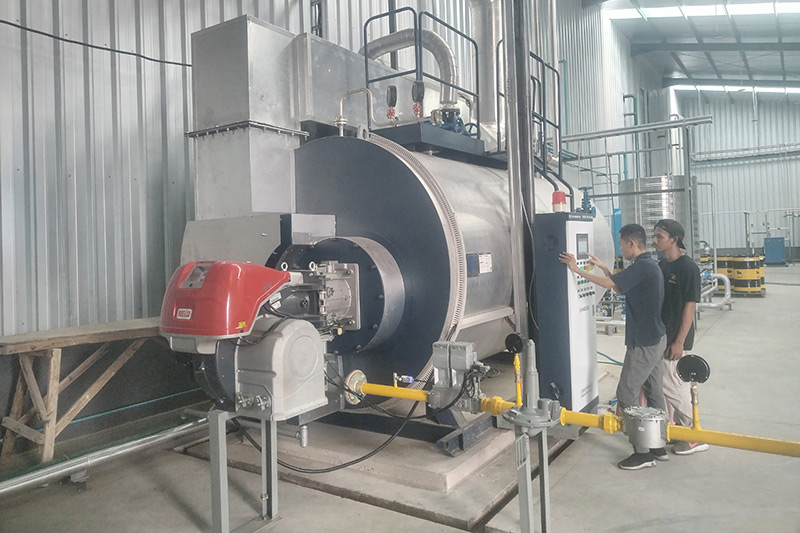
For a project using several oil-fired boilers, the customer should provide a clear steam demand profile and fuel specification.
The following information is particularly useful:
- Total required steam capacity
- Normal steam consumption
- Peak steam consumption
- Required steam pressure
- Oil type and fuel specification
- Number of boilers planned
- Required standby capacity
- Operating hours
- Available boiler room space
- Fuel storage conditions
- Water treatment conditions
- Local emissions and safety requirements
For example, an 18 ton/h total boiler system does not necessarily need all three boilers operating continuously. The operating strategy should be based on actual steam demand.
Why Is System Capacity More Important Than Individual Boiler Capacity?
In a multi-boiler project, looking only at the capacity of one boiler can be misleading.
The customer should consider the complete steam system and how the individual boilers will work together.
| System Level | Capacity |
|---|---|
| Oil-Fired Boiler 1 | 6 ton/h |
| Oil-Fired Boiler 2 | 6 ton/h |
| Oil-Fired Boiler 3 | 6 ton/h |
| Total | 18 ton/h |
This structure allows the project team to evaluate the relationship between normal load, peak load, standby capacity, fuel consumption, and future production requirements.
How Does the Fuel System Affect an Oil-Fired Boiler Project?
Fuel system design is one of the important differences between an oil-fired and gas-fired boiler project.
The oil must be stored and delivered to the burner continuously. The system may include an oil storage tank, transfer pump, filters, fuel lines, valves, and other components. Some heavy oils may also require heating to achieve the required viscosity for pumping and atomization.
Therefore, the final quotation for an oil-fired boiler project should clearly state which fuel system components are included in the equipment scope.
This is especially important for large industrial projects because the boiler price alone does not represent the complete fuel-fired steam system.
About Dabonn Boiler
Dabonn Boiler is an industrial boiler manufacturer and power plant project integration supplier with more than 30 years of boiler manufacturing experience.
Dabonn has supplied industrial boiler equipment to customers in more than 130 countries and regions and has served more than 10,000 industrial boiler customers.
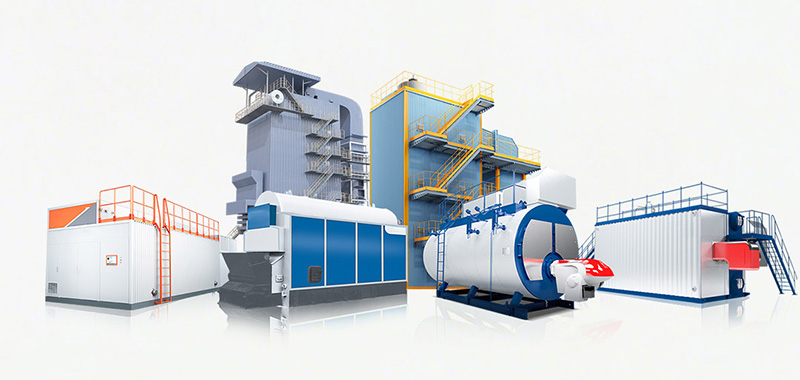
The company supplies oil, gas, biomass, coal and other industrial boiler systems for steam, hot water, thermal oil, and process heating applications.
| Dabonn Boiler | Information |
|---|---|
| Experience | 30+ years |
| Countries and regions | 130+ |
| Industrial customers | 10,000+ |
| Boiler fuels | Oil, gas, biomass, coal and others |
| Project capability | Industrial boiler engineering and equipment supply |
Key Facts From the Saudi Oil-Fired Boiler Project
- 3 oil-fired steam boilers
- 6 ton/h per boiler
- 18 ton/h combined rated capacity
- Approximately 18,000 kg/h total rated steam output
- Project industry: oil and petrochemical
- Project location: Saudi Arabia
- Fuel: oil
Frequently Asked Questions
How many oil-fired boilers were supplied for the Saudi project?
Dabonn supplied three oil-fired steam boilers for the project.
What was the capacity of each oil-fired boiler?
Each boiler had a rated capacity of 6 ton/h.
What was the total capacity of the Saudi oil-fired boiler system?
The three boilers provided a combined rated capacity of 18 ton/h, or approximately 18,000 kg of steam per hour at rated capacity.
Why would an industrial project use three oil-fired boilers?
Multiple boilers can provide operational flexibility, partial-load operation, maintenance flexibility, and potential redundancy. The appropriate configuration depends on the project’s actual steam demand and engineering requirements.
What industry was this oil-fired boiler project for?
The project was for the oil and petrochemical sector in Saudi Arabia.
What fuel system does an oil-fired steam boiler need?
An oil-fired steam boiler normally requires an appropriate fuel storage and supply system. Depending on the oil type, the system may include storage tanks, pumps, filtration, fuel heating, valves, and fuel lines.
Can three oil-fired boilers operate together?
Yes. Multiple oil-fired boilers can be designed to supply a common steam system. The control and steam header arrangement should be designed according to the project’s operating requirements.
Does a multi-boiler oil-fired system need special control?
Yes. A multi-boiler system normally requires coordinated control of boiler operation, steam pressure, water level, combustion, fuel supply, and safety systems.
Conclusion
The Saudi project demonstrates how Dabonn supplied a multi-boiler steam system for an industrial oil and petrochemical application. The project included 3 × 6 ton/h oil-fired steam boilers, providing a combined rated capacity of 18 ton/h.
For large industrial oil-fired steam projects, selecting the correct system configuration is just as important as selecting the capacity of an individual boiler. Multiple boilers can provide operational flexibility, while the fuel storage and supply system must be designed around the actual oil specification.
If your industrial project requires multiple oil-fired steam boilers, the most useful starting information is the total steam demand, peak demand, required pressure, oil specification, operating schedule, fuel storage conditions, and required standby capacity.